
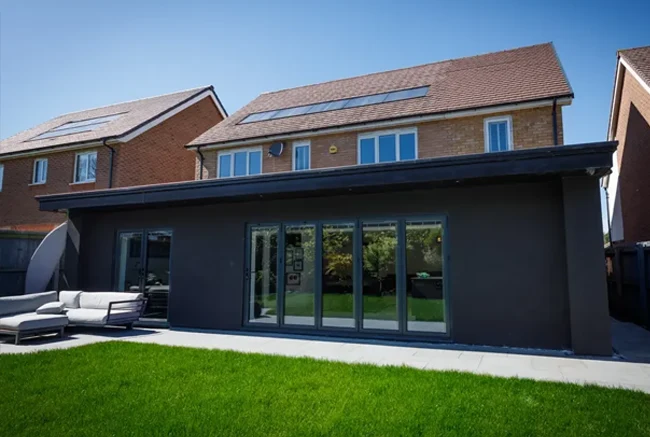
What to Look for When Choosing Extension Builders in Preston
Choosing who builds your extension is one of the biggest decisions you’ll make as a homeowner. In Preston, whether you’re in Fulwood, Broughton, Ingol, Ribbleton or closer to the city centre — the right builder can mean a smooth project, a well-finished home and a result that adds real value. The wrong one can mean delays, extra cost and a lot of stress.
This guide is written for homeowners in Preston and the surrounding Lancashire area in 2026.
Why this choice matters more in 2026
Anyone in the UK can call themselves a builder. There is still no single national licence for general building work. That is why the Federation of Master Builders (FMB), TrustMark and Trading Standards all stress the same point: do your own checks before you pay a deposit.
The government has also tightened consumer protection during 2026. A new Trusted Payments scheme launched in September 2026 so that money on some projects can be released in stages as work is signed off. An Approved Code for home-improvement traders is being rolled out through the year. These schemes are optional, but they show the direction of travel: more transparency, staged payments and clearer dispute routes.
A good Preston extension builder should already work that way — written quotes, a proper contract, insurance you can see, and a payment schedule tied to progress.
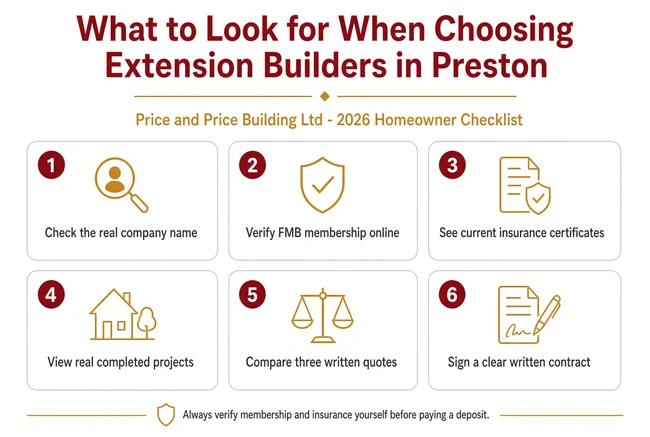
1. Check they are a real, established business
Start with the basics.
- Ask for the full legal name of the business (not just a trading name).
- If they are a limited company, search them on Companies House. Check that the company is active, the registered address is real, and the directors match the people you are dealing with.
- Look for a physical address, not just a mobile number.
- Ask how long they have been trading. Price & Price Building Ltd, for example, has been serving homes across the Northwest for over 20 years and is based in Chorley, serving Preston and the surrounding towns.
A legitimate firm will not mind you checking. Reluctance is a warning sign.
2. Verify trade-body membership — don’t just trust a logo
Membership of a recognised body is one of the strongest filters available in 2026.
Federation of Master Builders (FMB)
FMB members are vetted before they join. That process includes trading and credit checks, proof of public liability insurance, director checks for limited companies, and an inspection of their work. Membership is then monitored. Members also sign up to the FMB Code of Conduct, which covers written quotes, contracts, communication and workmanship.
Always check the member on the FMB website rather than relying on a badge on a van or quote. Some firms claim membership when they are not current members.
3. Ask to see current insurance certificates
Ask for copies, not screenshots of a website logo.
At minimum, look for:
- Public liability insurance — covers damage to your property or injury to other people. There is no single legal minimum for every self-employed builder, but industry guidance in 2026 commonly points to cover of £2 million or more for extension work. For a two-storey build next to a neighbour, higher cover is more appropriate.
- Employers’ liability insurance — legally required at a minimum of £5 million if the firm has employees or uses labour in a way that counts as employment.
- Dates and named insured — the certificate must be in date, and the insured name should match the company on your quote.
If they use subcontractors for electrics or gas, those trades must hold the right registrations: NICEIC or NAPIT for electrical work, and Gas Safe for any gas work. Those are legal requirements, not optional extras.
4. Look at real completed work — not stock photos
Anyone can put a polished image on a website. Ask to see:
- Recent extensions of a similar type and size to yours
- Projects in Preston or nearby Lancashire if possible
- Photos of their own completed work
- Permission to speak to a previous client
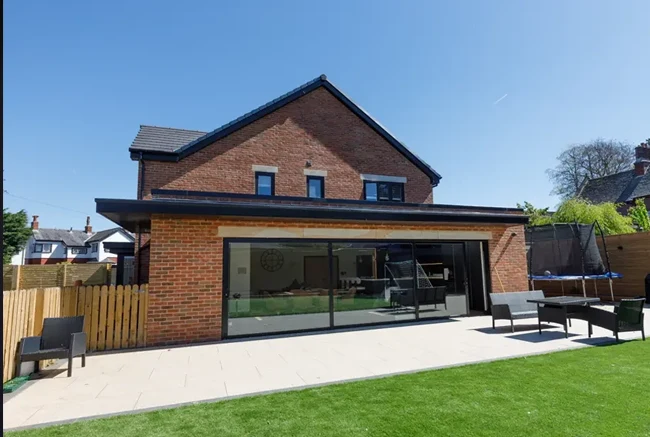
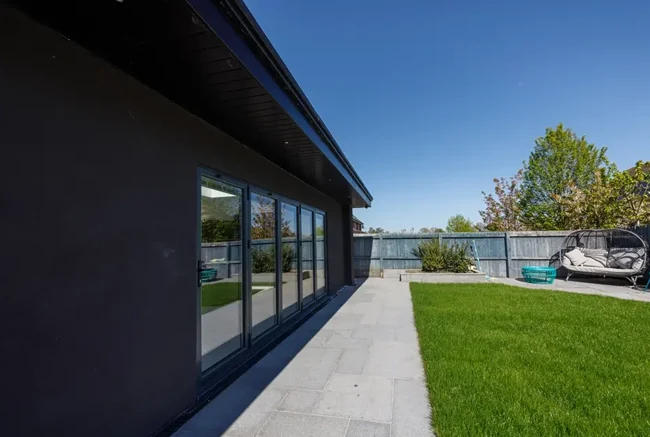
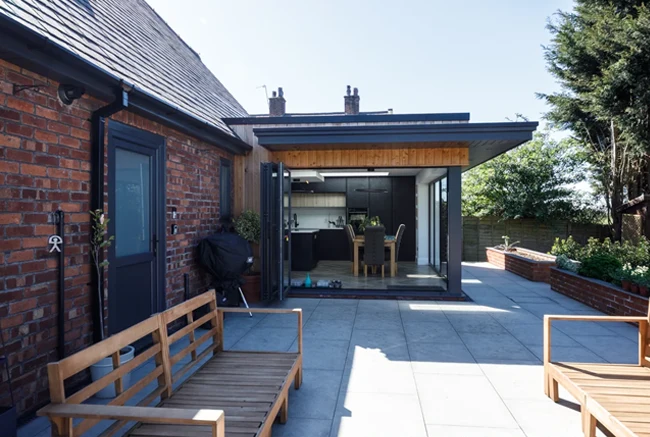
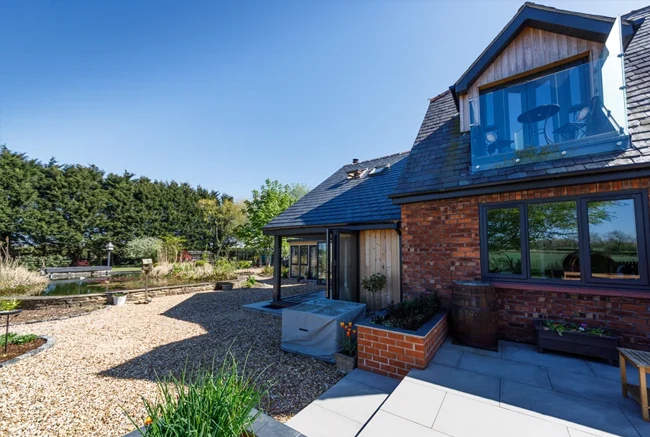
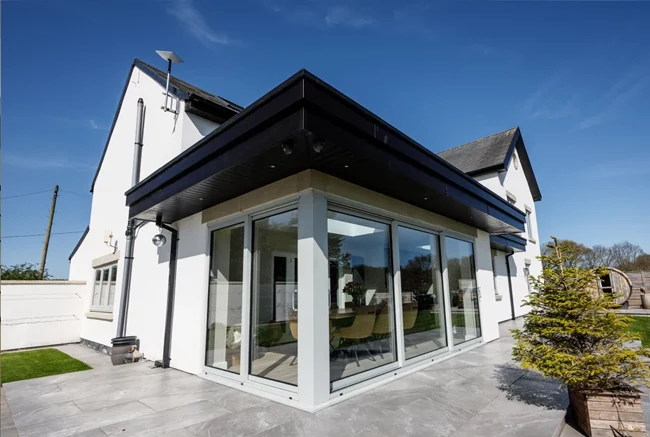
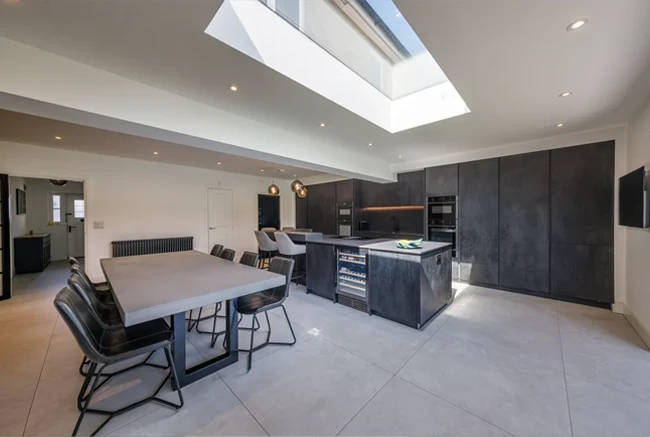
At Price & Price, the photographs on our website are of our own projects. We do not use stock images or AI renders of work we have not built. That should be the standard you expect from any builder you shortlist.
Recent Home Extensions Built By The Price & Price Team
5. Get at least three like-for-like written quotes
A verbal price is not a quote.
A useful quote in 2026 should be itemised, so you can compare:
- Groundworks and foundations
- Structure, roof and external finishes
- Windows and doors
- Electrics, plumbing and heating
- Insulation and Building Regulations compliance
- Internal finishes
- What is not included (kitchen units, flooring, decorating, landscaping)
The cheapest quote is not automatically the best. If one price is far below the others, ask why. It may leave out insulation to current Part L standards, professional fees, waste removal or a proper contingency.
Price & Price provide free, no-obligation quotes after a consultation. We would rather talk through the specification first than give you a number that does not reflect the job.
6. Insist on a written contract before work starts
This is non-negotiable for an extension.
A proper contract should cover:
- The agreed price and what is included
- Drawings and specification
- Start and expected completion dates
- How extra work (variations) will be priced and approved
- The payment schedule
- Insurance, warranties and guarantees
- How snagging and defects will be handled
- What happens if work is delayed
FMB members can use updated FMB contracts that also set out duty-holder roles under the Building Safety Act. That matters because design, construction and compliance responsibilities need to be clear — especially on a design-and-build project.
Under the Consumer Rights Act 2015, building work for a homeowner must be carried out with reasonable care and skill, within a reasonable time, and at a reasonable price if no price was agreed. A written contract makes those rights far easier to enforce.
7. Be careful with deposits and stage payments
There is no single legal cap on deposits, but in 2026 the practical advice is consistent:
- Deposits of around 5–20% are common
- A deposit well above 25%, or a demand for a large cash payment before any work starts, is a red flag
- Payments should be tied to completed stages, not calendar dates
- Keep a small retention until snagging is finished
If the contract value is between £100 and £30,000, paying even part of it by credit card can bring the whole contract under Section 75 of the Consumer Credit Act. That can give you extra protection if the builder fails to deliver. For larger extensions above that threshold, staged payments and (where available) insurance-backed or milestone-protected payment arrangements matter more.
Never pay cash “off the books”. You lose a paper trail and most of your consumer protection.
8. Ask what happens if something goes wrong
A professional builder should be able to explain:
- Their workmanship warranty
- Manufacturer guarantees on products (windows, roof coverings, boilers)
- Whether an insurance-backed guarantee is available (for example the FMB Building Work Guarantee on eligible work)
- Who deals with defects if the firm later stops trading
A guarantee that only exists while the builder is still in business is weaker than one backed by an insurer.
9. Check they understand Preston planning and Building Regulations
A good extension builder in Preston should be able to talk you through both planning and Building Regulations — they are not the same thing.
Planning
Preston City Council is the local planning authority for most of the city, including Fulwood and Broughton. Many single-storey rear extensions can fall under permitted development, but the limits are strict (typically up to 3m on a terraced or semi-detached house and 4m on a detached house for a standard rear extension, with further options under the larger-home extension neighbour consultation process). Side extensions, two-storey work, work in conservation areas, and anything that goes beyond the limits usually need a householder planning application.
Building Regulations
These apply even when planning permission is not needed. They cover structure, fire safety, drainage, electrics, ventilation and energy performance (Part L). As of autumn 2026, most householder extensions still need to meet the current Part L standards for existing dwellings. A new Approved Document L (2026 edition) has been published, with the main new rules taking effect from 24 March 2027 for most work. Your builder should already be designing insulation, glazing and heating so the extension will pass Building Control now — and stay comfortable for years.
Also ask about:
- Party Wall etc. Act 1996 if you are building close to a neighbour
- Access, parking and waste on a typical Preston street
- How they will keep the house liveable during the build
Price & Price offer a full design and build service. That includes CAD visuals, architectural drawings, help with planning applications and project-managed construction. You deal with one team instead of coordinating designer, planner and builder separately.
10. Local knowledge still counts
Preston is not one type of house. A 1930s semi in Fulwood, a newer property in Broughton and a tighter plot closer to the city centre all come with different constraints: garden depth, neighbours, conservation character, parking and drainage.
A builder who already works across Preston and Lancashire will be used to those local conditions and to dealing with Preston City Council. That does not replace the checks above — but it does reduce the chance of surprises once work starts.
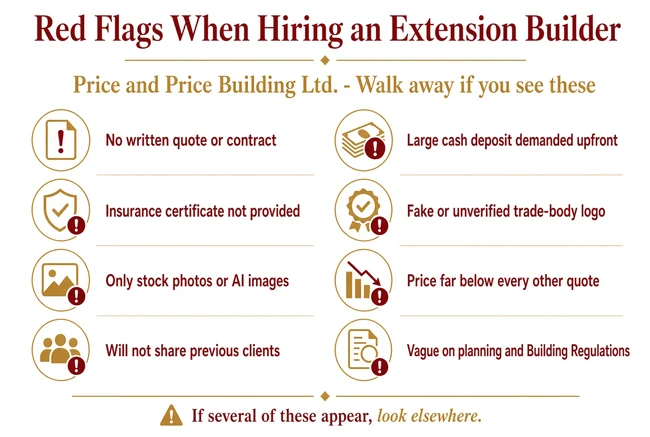
Red flags to walk away from
If you see several of these, look elsewhere:
- No written quote or contract
- Pressure to pay a large deposit immediately
- Cash-only
- No insurance certificate
- A trade-body logo that does not appear on the official register
- Only stock photos or AI images of “their” work
- A price far below every other quote with no clear explanation
- Reluctance to let you speak to previous clients
- Vague answers on planning, Building Regulations or Party Wall
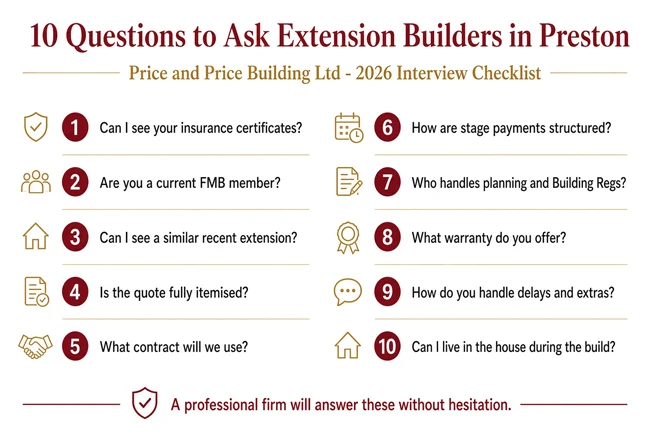
Questions to ask every builder on your shortlist
- Can I see your current public liability (and employers’ liability) certificates?
- Are you a current FMB member / TrustMark registered? Can I check that online?
- Can I visit or see photos of a similar extension you finished in the last 12–18 months?
- Will the quote be itemised, and what is excluded?
- What contract will we use?
- How are stage payments structured?
- Who is responsible for planning, Building Regulations and Party Wall notices?
- What warranty and insurance-backed guarantee do you offer?
- How do you handle variations and delays?
- Can I live in the house during the build, and how will you limit disruption?
A confident, professional firm will answer these without hesitation.
How Price & Price Builders work with Preston homeowners
If you want a local benchmark while you compare options, this is how we work:
- Free, no-obligation consultation and quote
- Full design and build, including CAD visuals
- Help obtaining planning permission where it is needed
- Project-managed construction from one team
- Federation of Master Builders membership
- Fully insured work, with product guarantees passed on
- Real photographs of our own completed extensions
We regularly work in Preston, Fulwood, Broughton, Penwortham and across Lancashire. If you would like to talk through your project, email shaun@priceandprice.co.uk or call 01257 265 673.
Guidance is based on the GPDO 2015 (as amended), Planning Portal householder guidance, England planning fees from 1 April 2026, and published information from Preston City Council and neighbouring Lancashire authorities as of September 2026. Always confirm the current position for your address with the relevant council and the Planning Portal.
Frequently asked questions
Do I have to use an FMB member?
No. But FMB membership is one of the few independent checks available in an industry that is still unlicensed. Always verify membership on the FMB website.
How many quotes should I get?
Three like-for-like written quotes is the usual advice from the FMB and consumer groups.
Can I stay in my house during an extension in Preston?
Most clients do. A good builder will contain the work area, protect existing rooms and plan around your routine. Larger kitchen projects may need a temporary cooking setup.
Is planning permission always required in Preston?
No. Many modest single-storey rear extensions can proceed under permitted development. Two-storey work, many side extensions and work in conservation areas usually need a householder application. Building Regulations approval is still required either way.
What is the difference between a quote and an estimate?
A quote should be a firm price for a defined specification. An estimate is only a guide and can move. Ask which one you are being given.
Choosing an extension builder in Preston does not need to feel like a leap of faith. Check the business, check the insurance, check the membership, compare written quotes and only start when the contract is clear. Do those things and you will already be ahead of most homeowners.
If you would like a straightforward conversation about your home — with no pressure and no hidden extras — get in touch with Price & Price Builders Ltd.
This article is general guidance for homeowners in Preston and Lancashire as of September 2026. Planning rules, fees and Building Regulations can change. Always check current requirements with Preston City Council / Building Control and take independent advice on contracts if you need it.